Skip to main content Scroll Top

Entries

16 Apr: Study abroad

Study abroad

One of the earliest study abroad opportunities for students was a UNC System "Year at Lyons" program, which enabled a select group of students from UNC—Chapel Hill, North Carolina State University, and UNC-Greensboro to spend their junior year at the University of Lyon in France. Sponsored by the French department, the program began in 1964 and was repeated annually through the early 1970s. The Romance language departments continued to be the primary sponsors of study abroad programs through the 1970s and 1980s. In 1989 the Daily Tar Heel reported low participation in study abroad outside of students majoring in one of the Romance languages. The university did not always make it easy —to study at another university in the 1970s, students had to withdraw from UNC and then reapply when they returned to the country. The numbers continued to rise as the university provided more support and more opportunities for students. In 1997 the UNC System began the UNC Exchange Program, which focused on providing low-cost study abroad opportunities for students. A 2000 Daily Tar Heel story, "Study Abroad No Longer Just for Rich Kids," suggested that study abroad was becoming more accessible to all students. By the mid-2010s UNC—Chapel Hill reported that more than 30 percent of undergraduates participated in a study abroad program.
16 Apr: Student Television

Student Television

In 1983 a small group of UNC—Chapel Hill students interested in television production formed Student Television. They received a loan from the university and borrowed equipment from the Department of Radio, Television, and Motion Pictures to get started. The initial shows were feature stories broadcast on a local cable channel and were viewable only by students living in Granville Towers or in fraternity and sorority houses, as the dorms did not yet have cable. Within a year Student Television membership had grown to more than 150 students. The best-known program is the long-running soap opera General College, which debuted in January 1987 and continues today. The network offers a variety of other programs, including Off the Cuff, a sketch comedy show that also premiered in 1987. Many former Student Television members have gone on to careers in the TV or movie industry, including actors Billy Crudup and Dan Cortese and ESPN anchor Stuart Scott.

16 Apr: Student Recreation Center

Student Recreation Center

In 1989 students voted to increase fees in order to support construction of a new gym on campus. In contrast to Woollen and Fetzer Gyms, which were controlled by the athletic department, the Student Recreation Center would be managed by student-led organizations. The new facility, located adjacent to Fetzer, opened in 1993.

16 Apr: Student government

Student government

Student government is the mechanism for self-governance that Carolina students have managed in one form or another for the university's entire history. Today it consists of an undergraduate division and a graduate and professional student division, both of which have executive, legislative, and honor system branches. All students pledge to follow the Honor Code, which includes ideals of academic honesty, personal integrity, and responsible citizenship. Members of both honor systems are responsible for hearing and adjudicating alleged Honor Code violations. The respective legislative branches oversee the management and disposition of student fees to approved organizations. By state law, since 1972 the undergraduate student body president serves as a full voting member on the UNC Board of Trustees.

For the first 100 years or so the Dialectic and Philanthropic Societies made laws governing the conduct of their members on and off campus. In 1875 the university required every student to join one of the societies, so that they would all come under a governing policy. Student government got its start in 1904, when class representatives organized a committee —later the Student Council —to preside over cases of hazing, cheating, and other violations of the Honor Code. The first student body constitution, adopted in 1946, established a Student Council, a Men's Social Council, a Women's Social Council, an Interdenominational Council, and the Women's Council. In the 1960s the student body grew more diverse and administrators became more involved in adjudicating student conduct, especially over the issues of dorm visitation rules, participation in protests, and drug use. In 1969 a committee appointed jointly by the chancellor and the student body president considered the issue of reform. Their work resulted in the creation of the Instrument of Student Judicial Governance, passed in 1974. The instrument has been amended since then but is the basis for the current governing system. The Graduate and Professional Student Federation was founded in 1971 to represent those students' interests within student government and university administration. In 2017 students voted to separate the two, creating the dual system that exists today.

16 Apr: Student Body Sculpture

Student Body Sculpture

The Student Body sculpture was installed in front of Davis Library in October 1990. A gift of the UNC—Chapel Hill class of 1985, the collection of seven bronze statues by artist Julia Balk was said to represent different aspects of student life. The sculpture was controversial immediately after it was installed. It was criticized as portraying stereotypical images of students, particularly a figure of an African American student spinning a basketball on his finger. Other statues drew criticism as well, including an African American woman with books balanced on top of her head and an Asian American woman carrying a violin case. The statues were repeatedly vandalized, and at one point the basketball player was tipped over and the basketball stolen. The university canceled its planned dedication ceremony. In June 1991 the statues were relocated to a less prominent location in a small courtyard behind Manning Hall. At some point after the move, the statues of the students with the basketball and the violin were removed.

16 Apr: Streaking

Streaking

In the mid-1970s streaking (running naked through campus buildings and grounds) was more than just a way of letting off steam on campus: it was a source of pride. UNC students founded the American Streaker Society (ASS), and competed with other schools to see who could have the largest group streak. The fad peaked in the spring of 1974 as groups of naked students streaked across campuses around the country. On the night of March 7 of that year, 924 UNC—Chapel Hill students (including 65 women) streaked through campus for about ten minutes, passing through South Building and the House Undergraduate Library along the way. The Carolina students thought they set a record, but it was eclipsed that same night by over 1,500 streakers at the University of Georgia. The tradition remains on campus, though on a smaller scale: each semester, on or around the last day of class, a group of students shed their clothes and streak through Davis Library.

Stone-walls

16 Apr: Stone walls

Stone walls

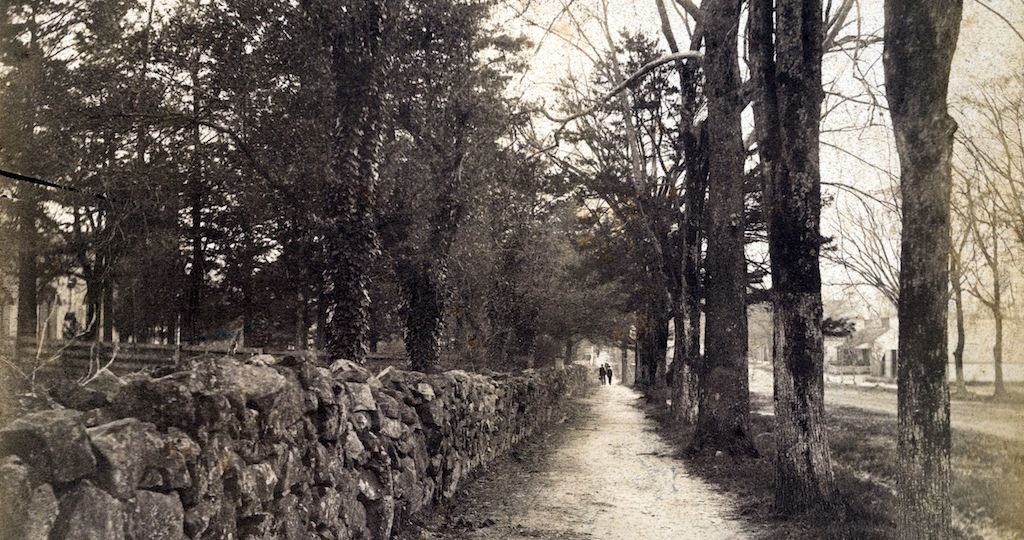
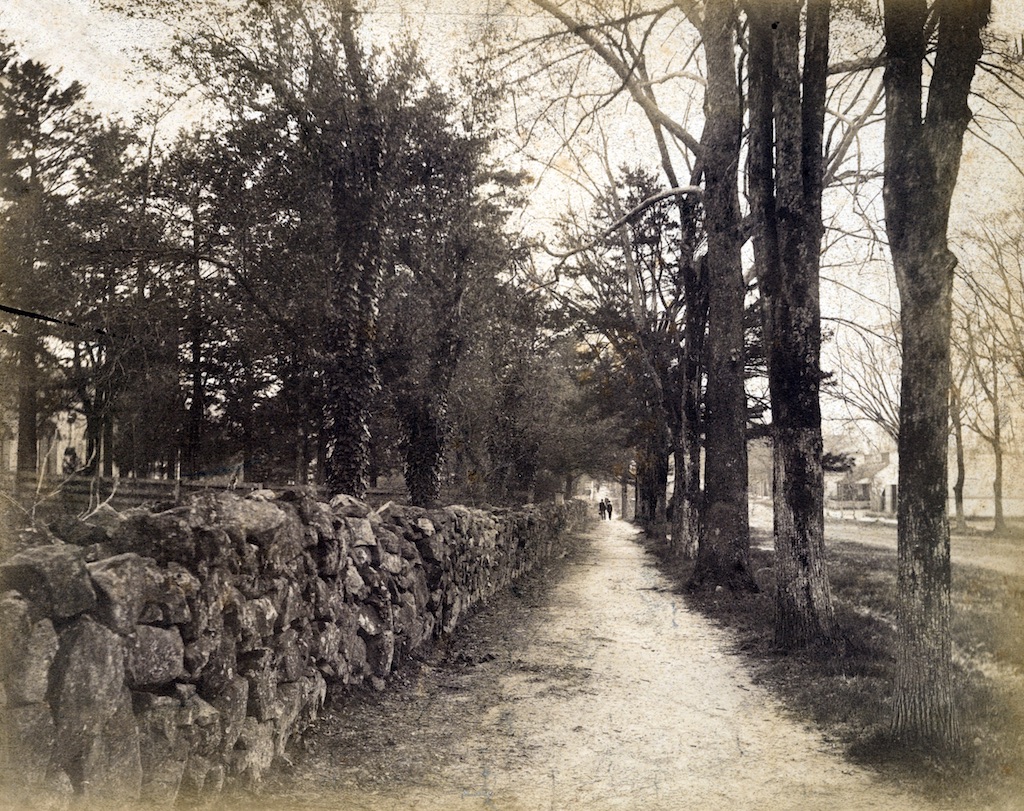
Geology professor Elisha Mitchell is credited with bringing the distinctive stone walls to the university campus. Serving double duty as faculty member and university bursar, Mitchell was charged with enclosing the campus, partly as a means of defining the boundaries of the university, but also to keep neighboring livestock from straying onto the college grounds. He was inspired by the long-lasting rock walls in his native Connecticut. Mitchell was also trying to save the university money by using the many rocks excavated during campus and town construction. Mitchell used enslaved laborers to build the walls, for which he was later reimbursed by the UNC Board of Trustees.

The original rock walls were dry stacked, relying on the artistry of the masons to find ways to fit the irregular rocks into a solid and sturdy pattern. Later walls, including those built today, use mortar to hold the rocks in place. As the university and town grew, a number of Chapel Hill African American masons built and maintained the walls, including brothers Alfred David and Willis Barbee and brothers Thomas and Lewis Booth. Examples of some of the original walls can still be found along Raleigh Street near the Coker Arboretum and the President's House.

This view of Franklin Street, ca. 1892, shows the stone walls along McCorkle Place, then much higher than they are now. Kemp Battle Photograph Album, North Carolina Collection Photo Archives, Wilson Library.


022818_StoneCenter0379

16 Apr: Stone Center

Stone Center

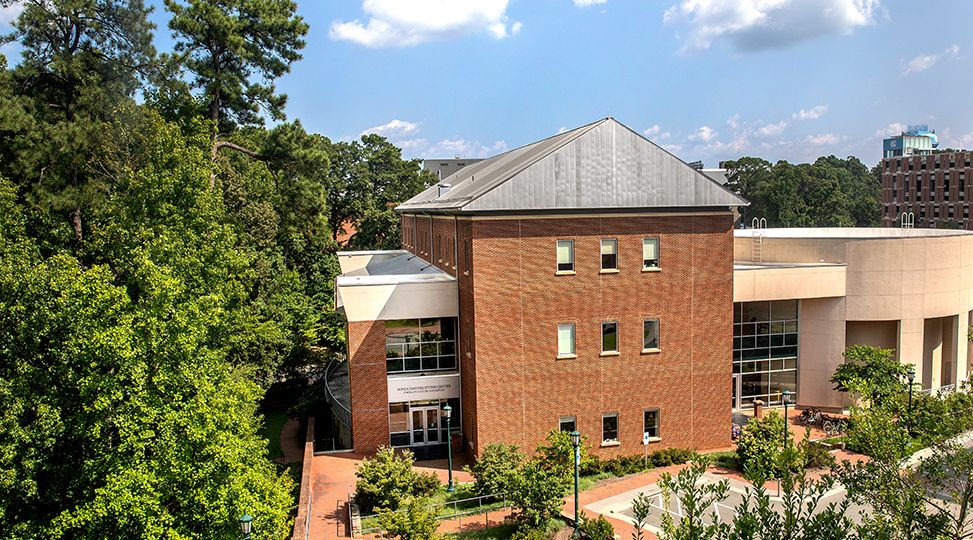
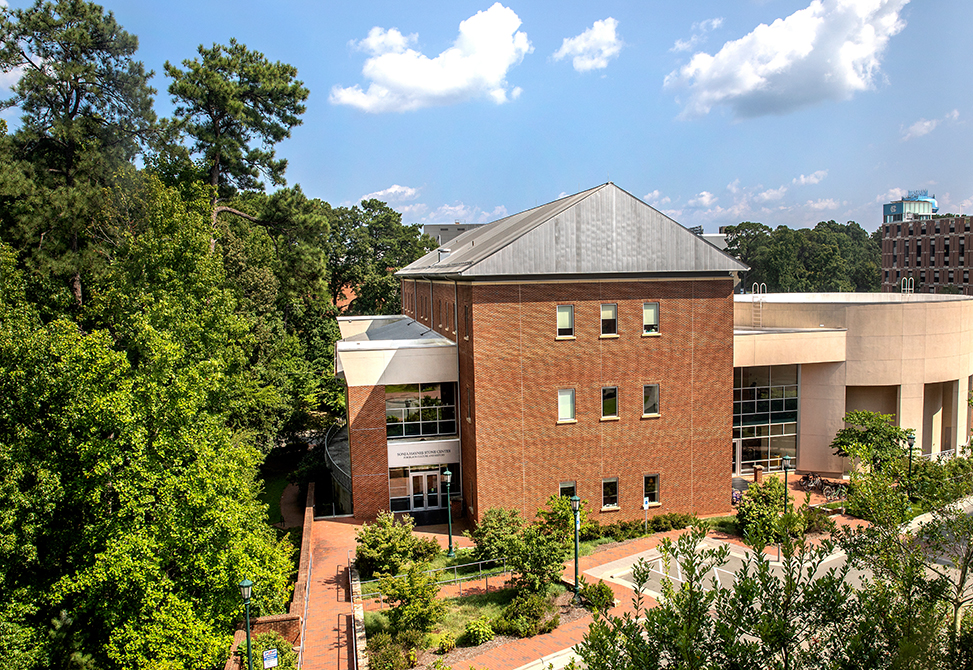
The Sonja Haynes Stone Center for Black Culture and History is home to Carolina's research, outreach, cultural, and service programs related to the study of the African American, diaspora, and African experiences. Designed by award-winning African American architect Philip Freelon, the building, which opened in 2004, is situated in a wooded area near the bell tower. It includes a gallery and museum exhibit space, a library, and an auditorium, as well as office and seminar spaces. Its existence is a testament to the determination of a coalition of students, alumni, faculty, and staff who urged the university to build the center and who supported it with private gifts. The majority of the $10 million needed to complete the building came from private donations from alumni and other supporters.

The Stone Center was established in 1988 as the Black Cultural Center, housed in the Graham Student Union. As it grew in popularity, so did calls for a freestanding building, especially after Dr. Stone's death in 1991. The university's chancellor initially opposed the idea, which sparked large student protests. Critical to the protest was the Black Awareness Council, a group of African American student athletes who brought more attention to the cause. After reading about the protests in the New York Times, filmmaker Spike Lee came to UNC, where he addressed a crowd of more than 7,000 people in the Dean Smith Center. The chancellor and board eventually agreed to support a freestanding center and in 1993 selected the location. The center's name was changed in 2002 to the Sonja Haynes Stone Center for Black Culture and History to mark its newly expanded mission and to emphasize its campus wide mandate to explore, research and support African American and diaspora arts, cultures and histories.

Dr. Sonja Haynes Stone came to Chapel Hill in 1974 to direct the Curriculum in African and Afro-American Studies as an assistant professor and became associate professor in 1984. She was the founder of the Southeastern Black Press Institute and was an advocate for the African American rights movement. At Carolina she also was the adviser to the Black Student Movement and was active in expanding the Afro-American studies curriculum. She was the first recipient of the Alumni Association's Outstanding Black Faculty Award.

Date Established: 2002

Date Range: 2002 – Present

Sonja Haynes Stone Center for Black Culture and History, 2018. Photo by Johnny Andrews, UNC???Chapel Hill.


16 Apr: Steward's Hall

Steward's Hall

Constructed for the care and boarding of students, this wooden structure was located just north of present-day Carr Building where Cameron Avenue now runs, facing west. Completed in 1795, it was the second building completed on campus. For many years the trustees fixed the price of board and hired a steward to run the operation. There are multiple accounts of student complaints about bad food and poor care throughout the early 1800s, such as the charge of "invariable service of mutton and of bacon too fat to be eaten." The steward soon came to be in charge of the general care of buildings and grounds, eventually leading to an official position of superintendent. In 1847 the university razed the building and filled in the nearby well. University president David Swain used the wings of the building to construct houses for enslaved workers on his nearby property, and the structure was sold to become the village schoolhouse.

16 Apr: Steele Building

Steele Building

Opened in 1921 as a dormitory, Steele housed students until the late 1950s, when it was renovated and converted to office space. Beginning in 1951, Steele was the home of UNC's first African American students. After court rulings forced the university to admit African American graduate students in 1951 and undergraduates in 1955, these pioneering students found a campus that was still largely segregated. In an arrangement that continued for several years, all African American students were assigned dorms on the third floor of Steele. Even though many empty rooms were left on the floor, no other students lived there.

Steele was also home in the 1950s and 1960s to the university-run Book Exchange (at one point called the Booketeria), which sold textbooks and school supplies. The rest of the building was converted to office space in 1958 and has since housed many different campus offices.

The building is named for alumnus Walter Leake Steele (class of 1844). Steele served several terms in the state legislature and was a member of the state secession convention prior to the Civil War. After the war he was elected to the U.S. House of Representatives and later worked in the textile industry in his native Richmond County. He was a longtime member of the UNC Board of Trustees.

Date Established: 1921

Date Range: 1921 – Present

Privacy Preferences
When you visit our website, it may store information through your browser from specific services, usually in form of cookies. Here you can change your privacy preferences. Please note that blocking some types of cookies may impact your experience on our website and the services we offer.