Skip to main content Scroll Top

Entries

16 Apr: Craige North Residence Hall

Craige North Residence Hall

Craige North Residence Hall opened in the fall of 2002, one of four new dorms completed at the same time (Hardin, Horton, and Koury are the others). The new dorms were built near existing high-rise dorms and given temporary names borrowing from the names of the older dorms. Craige North's temporary name has lasted longer than any of the others. The new dorms were in high demand when they opened, with students camping out to reserve a space. They also began a new experiment in bringing academic and residential life closer together by including classrooms in the dorms.

Date Established: 2000

Date Range: 2000 – Present
16 Apr: Contempo

Contempo

Published for only a few years in the early 1930s, the Chapel Hill literary magazine Contempo managed to attract national attention. Former UNC students Milton Abernethy and Anthony Buttitta founded the magazine and began to solicit contributions from well-known authors. They published works by William Faulkner, Ezra Pound, and William Carlos Williams, among many others. The magazine's December 1931 issue drew controversy for including Langston Hughes's poem "Christ in Alabama." The publication coincided with Hughes's visit to campus for a talk in Memorial Hall.

Date Established: 1931

Date Range: 1931 –
1934

16 Apr: Consolidation

Consolidation

From its founding in 1789 until 1932, the University of North Carolina was a single campus in Chapel Hill. During the Great Depression, the Brookings Institution recommended several cost-saving measures for the state government, which included consolidating the operations of the North Carolina College for Women in Greensboro (now UNC-Greensboro) and the North Carolina State College of Agriculture and Engineering (now North Carolina State University) in Raleigh with UNC in Chapel Hill. Under consolidation, the university operated with one board of trustees that oversaw all three campuses, along with a system leader initially designated chancellor but eventually changed to president. The leader of each campus was designated vice president at first, which changed to dean of administration, and eventually to chancellor.

Part of the consolidation plan included the elimination of duplicate programs. The most notorious decision was to eliminate UNC's engineering program in favor of North Carolina State's program. However, Carolina managed to retain its sanitary engineering courses, which eventually became the Department of Environmental Sciences and Engineering in the Gillings School of Global Public Health.

Date Established: 1932

Date Range: 1932 – Present

16 Apr: Connor Residence Hall

Connor Residence Hall

Connor Residence Hall was one of three new dorms opened in 1948 to accommodate the expanding student population entering the university following World War II. The other two built at the same time are Winston and Alexander, now known collectively as the Connor Community. The lawn framed by the dorms, known as "Connor Beach," was home to the popular Springfest music festival in the 1980s, and its successor, Connorstock, which began in the 2000s.

Known informally as B Dorm when it opened, the dorm was later named for archivist and historian Robert Digges Wimberly Connor. A native of Wilson, North Carolina, Connor graduated from UNC in 1899. After graduation he was a school teacher and helped establish the State Archives of North Carolina, which he led for several years. Connor joined the UNC Board of Trustees in 1913, and the faculty in 1921 when he was named a Kenan Professor of History. He left the university in 1934 when he was appointed by President Franklin D. Roosevelt as the first Archivist of the United States. He returned to Carolina in 1941, teaching and writing until his death in 1950.

Date Established: 1948

Date Range: 1948 – Present

ConfederateStatue_973

16 Apr: Confederate Monument (Silent Sam)

Confederate Monument (Silent Sam)

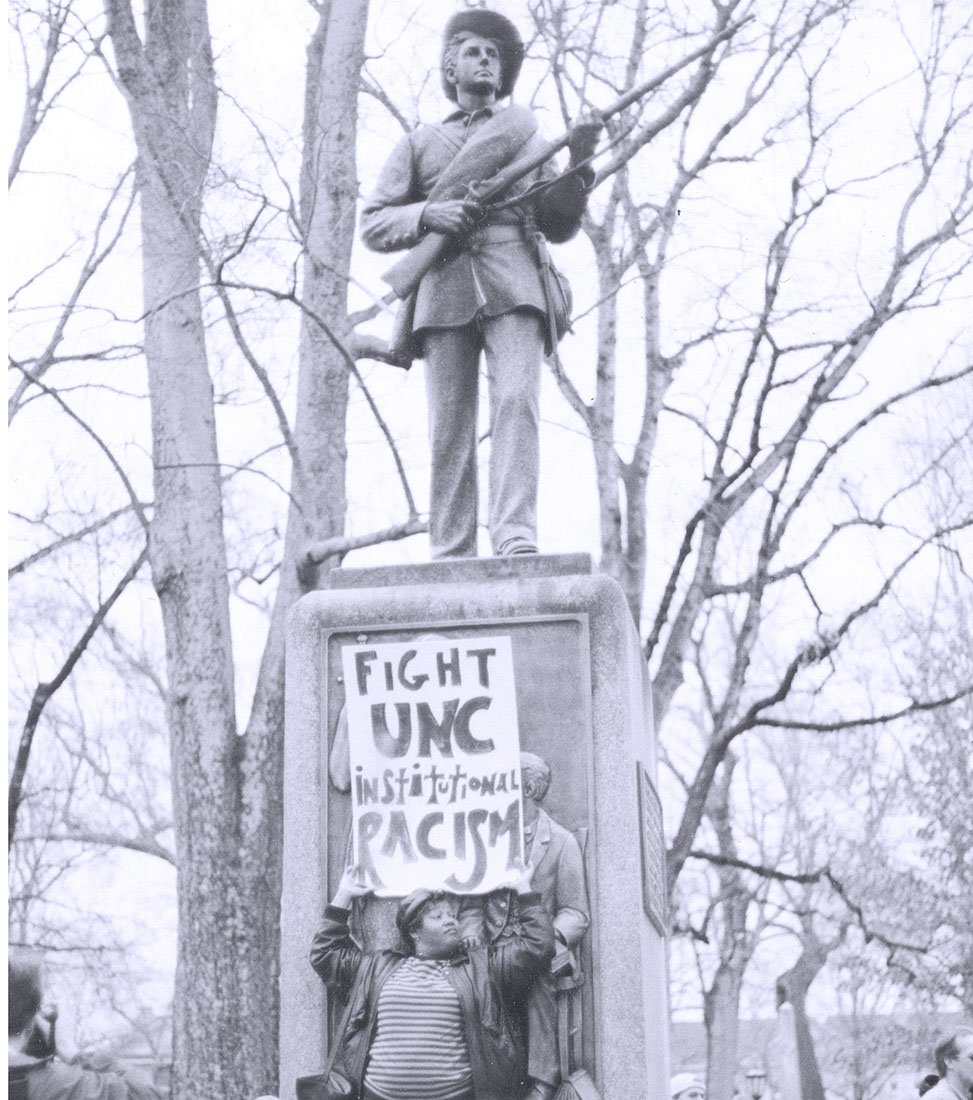
In 1908 the board of trustees approved a request from the North Carolina division of the United Daughters of the Confederacy (UDC) to build a Confederate monument on campus. University president Francis Venable was actively involved in planning and fund-raising for the monument and committed university funds to the effort when money from the UDC and alumni fell short. The university and the UDC chose Boston sculptor John Wilson to create the monument. It was dedicated in June 1913 to the university men who had fought for the Confederacy. The dedication ceremony included speeches by UDC and UNC leaders, North Carolina governor Locke Craig, and alumnus Julian S. Carr. Carr's speech has attracted the most attention. In it, he praised the Confederate army for "sav[ing] the very life of the Anglo Saxon race in the South" and recalled "horse-whipp[ing] a negro wench until her skirts hung in shreds" for insulting a white woman.

During its first decades on campus, the monument was either viewed as a war memorial or simply ignored by students. By the mid-twentieth century, students were calling it "Silent Sam," a nickname attributed both to the impassive look on the soldier's face and to his lack of ammunition. An enduring joke among undergraduates was that the soldier's rifle goes off whenever a virgin walks by.

The first public calls to remove the statue came in the mid-1960s and intensified in the late 1960s amid civil rights protests. Students and others have argued for decades that the statue is a monument to racism and white supremacy, claims supported by historians who place the monument within the context of early twentieth-century efforts to disenfranchise African American voters, establish the Jim Crow system of racial segregation, and rewrite the history of the Civil War.

The focus on the statue intensified in the mid-2010s in the midst of a national conversation about Confederate monuments in public spaces, and following the decision by several cities and universities to remove monuments. In 2018, after a rally off campus, a group of protesters pulled the statue down from its base. In 2019 Chancellor Carol L. Folt ordered the remaining parts of the monument to be removed in the same message in which she announced her resignation. The toppling of the statue and subsequent debates about what to do with it have kept UNC at the center of national discussions about white supremacy and Confederate memorialization. In its end-of-the-year review issue, the Daily Tar Heel called 2018 the Year of Sam.

Date Established: 1913

Date Range: 1913 – Present

UNC housekeeper Elaine Massey holds a sign under the Confederate monument, protesting institutional racism during a Martin Luther King Day protest in 1999. Photo by John Kenyon Chapman. John Kenyon Chapman Papers, Southern Historical Collection, Wilson Library.


16 Apr: Cone-Kenfield Tennis Center

Cone-Kenfield Tennis Center

Located near the Friday Center and Finley Golf Course, the Cone-Kenfield Tennis Center opened in 1992 to serve as a home for the UNC—Chapel Hill men's and women's tennis teams. It is named for Caesar Cone II, a tennis player at Carolina in the 1920s and son of a prominent textile industry leader. The Cone family contributed significantly toward the construction of the facility. The name also honors John Kenfield, Carolina's first tennis coach and one of the most successful in its history. Kenfield coached tennis at UNC from 1928 to 1955. He came to Carolina when the tennis program was fairly new and created one of the leading programs in the country, winning multiple national championships.

Computers_973

16 Apr: Computers

Computers

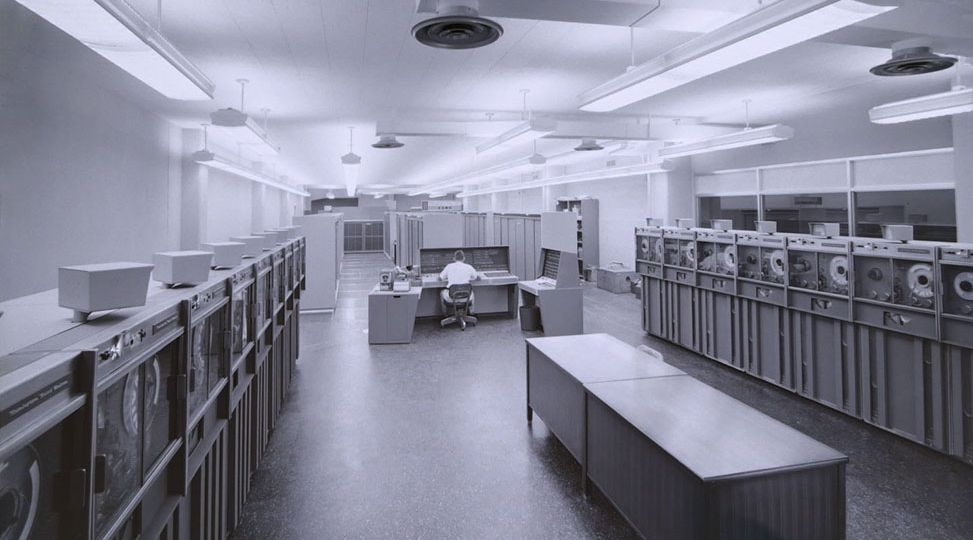
The university entered the computer age in 1959 when a nineteen-ton, $2.4 million UNIVAC 1105 arrived on campus. The newly established Computation Center, housed in Phillips Annex, drew national attention. The Census Bureau and the National Science Foundation were early partners, placing the university among national leaders in computer research. In 1962 Frederick R. Brooks Jr., then working at IBM, gave a presentation on campus titled "Ten Research Problems in Computer Science." The presentation was a factor in inspiring campus administrators to create a new academic department. The Department of Computer Science (originally called the Department of Information Science) was established in 1964, and Brooks was hired to lead it. At the time, only one other American university (Purdue) had a separate academic department dedicated to computer science. In 1968 presidential candidate Richard Nixon made a brief visit to campus to view the university's computer center. By the 1980s the increasing availability of personal computers began to transform teaching and learning across campus. Computers were used throughout the undergraduate curriculum, and the university responded to the growing need by building several computer labs in libraries and dorms. In the late 1990s the Carolina Computing Initiative was established as part of a program that required all incoming undergraduates to have laptop computers by the fall of 2000.

Date Established: 1959

Date Range: 1959 – Present

The UNIVAC computer in the UNC Computation Center, ca. 1959. UNC Photo Lab Collection, North Carolina Collection Photo Archives, Wilson Library.


16 Apr: Communism

Communism

Having weathered complaints of excessively liberal bias since the leadership of Frank Porter Graham in the 1930s, the university faced new accusations, beginning in the 1950s, of being a training ground for Communists. The claims were frequent enough that consolidated university president Gordon Gray addressed them in his 1950 inaugural address, stating that "Communists are not welcome" at Carolina or the other two system schools. The accusations were heightened a few years later when UNC alumnus Junius Scales, who was then working as an organizer for the U.S. Communist Party, began distributing publications on campus. The continued claims of Communist influence were a major factor in the passage of North Carolina's Speaker Ban Law by the state legislature in 1963, which prohibited known Communists from speaking at any of North Carolina's state-supported schools. UNC administrators, especially system president William C. Friday, had to balance their continued resistance to claims of Communist influence with a defense of academic freedom. The university's resistance to the speaker ban only further supported the views of some North Carolinians that Chapel Hill was a haven for Communist sympathizers.

16 Apr: Common Hall

Common Hall

In 1885 students were eager to have a new ballroom to host dances. When the university was unable to provide one, a group of students formed a private association and had one built on campus on the current site of Phillips Hall. When it wasn't used for dances, the building was leased to the university for use as a gymnasium. In 1898, following the opening of Bynum Gymnasium, the building was converted into a dining hall. It served as the main dining facility for students until Swain Hall opened in 1914, often offering cheaper meals than other boarding houses located off campus. However, the fare was not always popular with the students. A 1911 Tar Heel article described a student deciding to become a vegetarian after attempting to eat a Commons Hall steak. In 1915 the building was given to the university. During World War I students used the facility for military training. It was later demolished.

«


16 Apr: Colors

Colors

The university's school colors come from the two debating societies that were prominent in early campus life: the Philanthropic Society's color was white, and the Dialectic Society's color was light blue. Students wore ribbons in their society's color to important school events, and the ribbons also were used on diplomas awarded by the societies. In the late 1880s, when UNC began competing in intercollegiate athletics, the teams adopted white and light blue as the school colors. Early coverage of Carolina football games in the Tar Heel sometimes referred to the team as "the white and blue." In 1894 students started a short-lived newspaper called the White and Blue to serve as a competitor to the Tar Heel. The school colors also featured prominently in a song written by W. S. Myers in 1897:

Only a bow of ribbon,
A ribbon of white and blue,
Faded, soiled, and crumpled,
A token so true.
Only a bow of ribbon,
Of ribbon white and blue,
The emblem of departed days,
The colors of N.C.U.

Though performed a few times by the UNC Glee Club, "Only a Bow of Ribbon" has not had the staying power of Myers's other composition, "Hark the Sound."

Privacy Preferences
When you visit our website, it may store information through your browser from specific services, usually in form of cookies. Here you can change your privacy preferences. Please note that blocking some types of cookies may impact your experience on our website and the services we offer.