Skip to main content Scroll Top

Entries

BeardHall_973

16 Apr: Beard Hall

Beard Hall

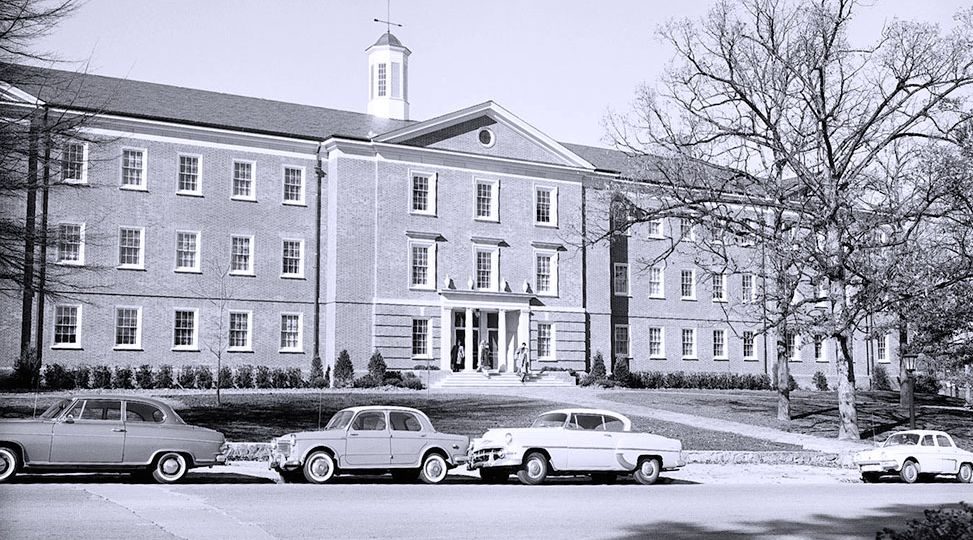
Beard Hall has been the home of the School of Pharmacy since its dedication in 1960. The Daily Tar Heel reported that approximately 1,000 people attended the dedication, including a large number of pharmacists. The building is named for John Grover Beard, a native of Kernersville who came to Chapel Hill as an undergraduate and never left. He earned a degree in pharmacy in 1909 and was hired as an assistant instructor right after graduation. He was a full professor by 1919 and served as dean from 1931 until his death in 1946. In 2015 the School of Pharmacy began renovations in Beard Hall to enable students and faculty to better incorporate technology in their teaching and research.
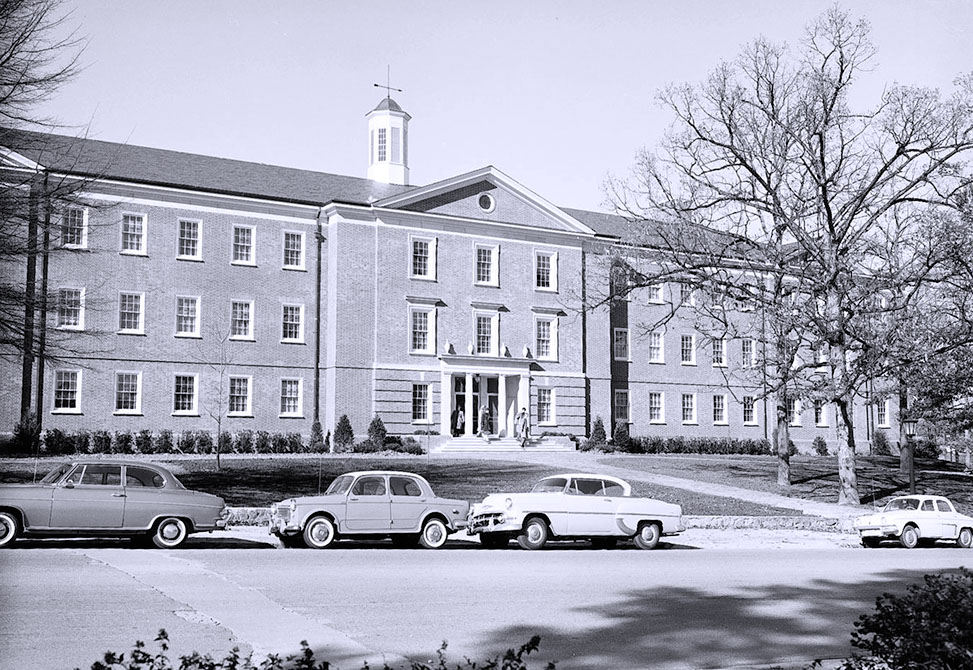
Beard Hall, December 1959. UNC Photo Lab Collection, North Carolina Collection Photo Archives, Wilson Library.
 

16 Apr: Battle Park

Battle Park

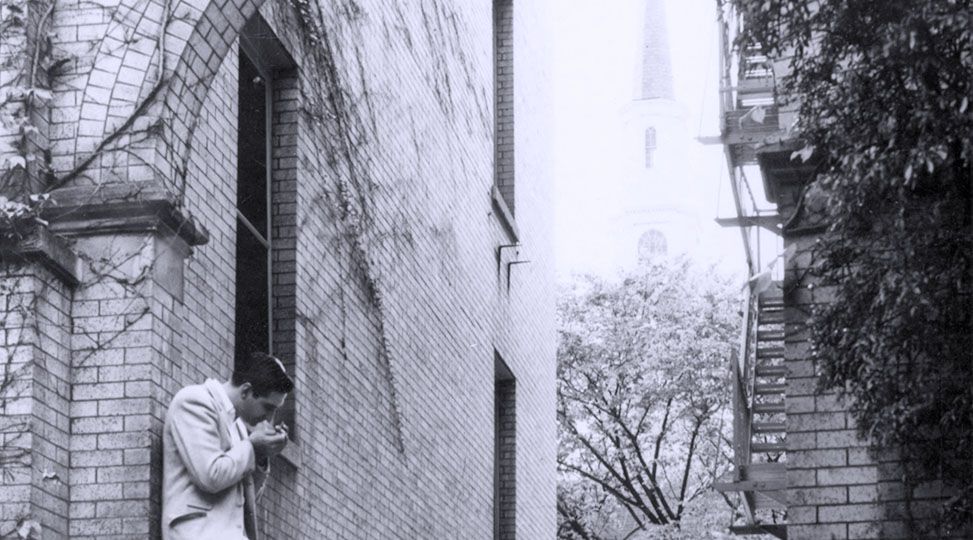
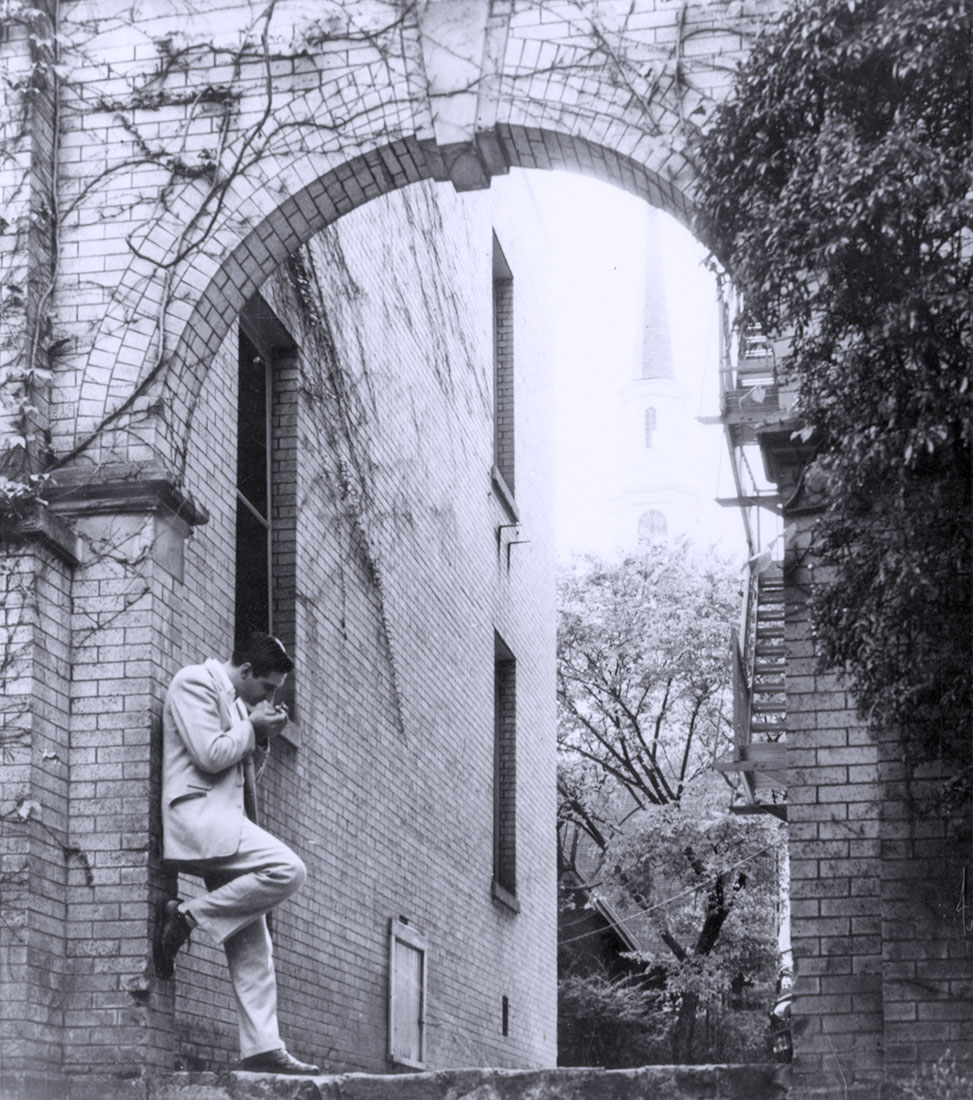
Battle Park is the wooded area on the east side of campus extending from the Forest Theatre and encompassing the Order of the Gimghoul's Hippol Castle. The park is named for former university president Kemp Plummer Battle, who was fond of walking in the woods and who forged many of the trails that are still used today. Battle named many of the notable trees and overlooks in the park. Names like Trysting Poplar and Flirtation Knoll hint at the use of the park by students for romantic encounters.

The park has passed through several owners over the years. Part of the initial acquisition of land by the university in the 1790s, much of the park land was sold in the 1870s to pay off debts incurred during and after the Civil War. It was purchased by alumnus Paul Cameron and later passed into the hands of faculty member Horace Williams, who explored the idea of building a housing development on the property. The land was eventually purchased by the Order of Gimghoul, who used part of it as the site of their castle. The order deeded several large tracts of land back to the university on the condition that it be used as a park. In 1971 the park, along with the adjacent residential areas in the Chapel Hill Historic District, was placed on the National Register of Historic Places. Since 2004 Battle Park has been under the management of the North Carolina Botanical Garden.

Date Established: 1740

Date Range: 1740 – Present

BattleHall_973

16 Apr: Battle Hall

Battle Hall

Built in 1912 as a dormitory, Battle Hall was one of the three buildings on the northwest corner of McCorkle Place on Franklin Street (Vance and Pettigrew Halls are attached). Converted to office space in the late 1960s, Battle Hall housed the university's personnel department for many years. It is one of only a few examples of a building named for a living person. Kemp Plummer Battle, who served as university president from 1876 to 1891, was still on the faculty when the building opened. An 1849 graduate of Carolina, Battle was active in the campaign to reopen the university in 1875. After he left the college presidency he was appointed Alumni Professor of History, a position he held until his death in 1919. Battle helped begin graduate study in history at UNC and worked to build the library's collections of historic artifacts and manuscripts. His two-volume History of the University of North Carolina (1907—12) is still considered an essential source for understanding the early history of the university.

Date Established: 1912

Date Range: 1912 – Present

Battle-Vance-Pettigrew building, ca. 1920s. Battle Hall is on the right. UNC Image Collection, North Carolina Collection Photo Archives, Wilson Library.
 

Basketball_973

16 Apr: Basketball

Basketball

Basketball was first organized as a varsity sport at the university in late 1910, with the team playing its first game on January 27, 1911, a victory over Virginia Christian College. The team played its home games in Bynum Gymnasium. Though basketball initially was not as popular as football and basketball, the university developed a successful basketball program in the 1920s, winning the Southern Conference several times and completing an undefeated season in 1924. It was during this era that a sportswriter, commenting on the fast play and white uniforms of the team, gave them the unofficial nickname "White Phantoms," which would continue to be used through the 1950s.

Even amid growing concerns on campus in the 1930s about the role of athletics in the university, the basketball team continued to have success. The games moved into a larger space in the new Woollen Gym in 1938. UNC—Chapel Hill was one of the founding members of the Atlantic Coast Conference in 1953 and built intense and lasting rivalries with Duke and N.C. State. The program rose to national prominence in 1957 when a team of players primarily from New York won the national championship in a thrilling triple overtime victory over Kansas.

The basketball program faced a series of challenges in the early 1960s, including NCAA investigations, the departure of coach Frank McGuire for the NBA, and a gambling scandal at the popular Dixie Classic tournament. With increased scrutiny on college sports in general and especially basketball, university administrators decided not to go after another high-profile coach and instead simply promoted a young assistant coach named Dean Smith.

Despite some challenging years early in his tenure —students hanged Smith in effigy after a particularly bad loss in 1965 —Smith would go on to become one of the most revered coaches in basketball history, leading the Tar Heels for thirty-one seasons. He led the team to multiple ACC championships and NCAA Final Four games and won national championships in 1982 and 1993. His national reputation was evident in his selection as coach for the 1976 Olympic basketball team. When UNC—Chapel Hill opened a new, much larger basketball arena in 1986, it was named for Smith.

Smith was instrumental in recruiting African American players to the basketball team for the first time. Willie Cooper, who played on the freshman team in 1964, was the first African American basketball player at UNC. He was followed a few years later by Charles Scott, who became the first African American varsity basketball player at Carolina and had a very successful career at UNC.
Carolina basketball entered a new era in 2003 with the hiring of Roy Williams, an alumnus and former assistant coach under Dean Smith. Tar Heel teams led by Williams won national championships in 2005, 2009, and 2017.

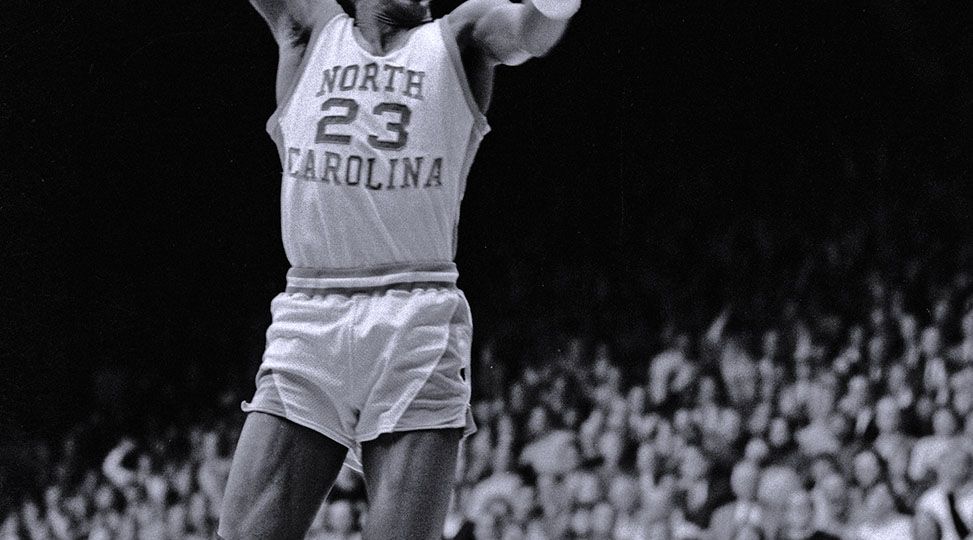
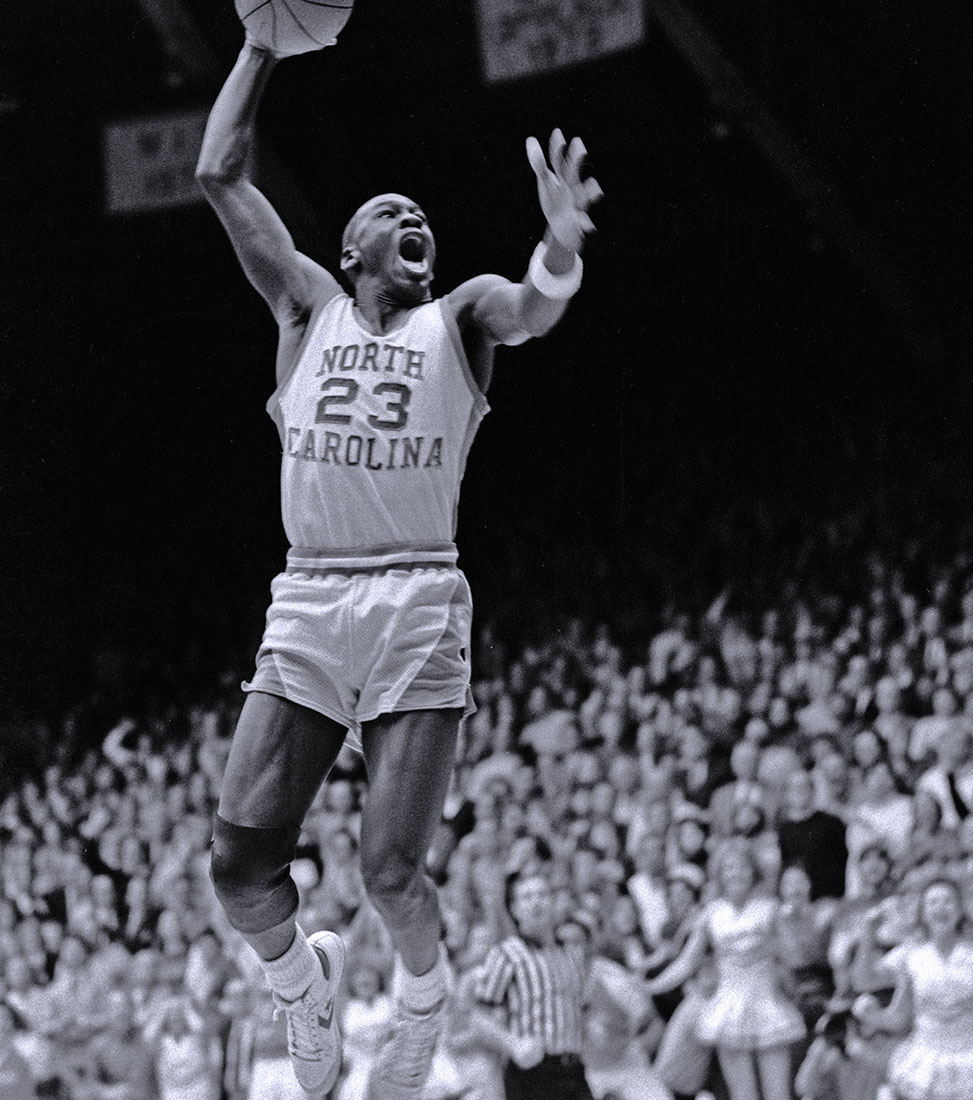
The number of retired and honored jerseys hanging from the Dean Smith Center rafters is evidence of the many great Carolina basketball players over the years. Some of UNC—Chapel Hill's most honored players include player-of-the-year award winners Lennie Rosenbluth, Phil Ford, Antawn Jamison, and Tyler Hansborough. Many former Tar Heel stars, including James Worthy, Vince Carter, and Danny Green, have gone on to long and successful NBA careers. But the university's best-known player (and almost certainly its most recognizable alumnus) is Michael Jordan, who played at Carolina from 1982 to 1984. Beginning with his championship-winning shot as a freshman and continuing through an outstanding NBA career, Jordan became one of the most popular athletes in the world. Even decades after his playing career, Jordan remained popular at Carolina, with fans wearing #23 jerseys to games and his "Jumpman" silhouette appearing on the team's uniforms.

UNC women students first organized a basketball team in 1930. Called the Tar Heelettes by the Daily Tar Heel, they played other local club teams. The first women's intercollegiate game was played a few years later. Women's basketball was established as a varsity sport in 1971. The team won its first ACC championship in 1984. In 1986 Sylvia Hatchell was hired as head coach. Hatchell would become one of the most successful women's basketball coaches of all time, leading the Tar Heels to a national championship in 1994 and multiple ACC championships. She was inducted into the Naismith Memorial Basketball Hall of Fame in 2013.

Date Established: 1910

Date Range: 1910 – Present

Michael Jordan going up for a dunk in a game against the University of Virginia in 1983. Photo by Hugh Morton. Hugh Morton Photo Collection, North Carolina Collection Photo Archives, Wilson Library.
 

Baseball_973

16 Apr: Baseball

Baseball

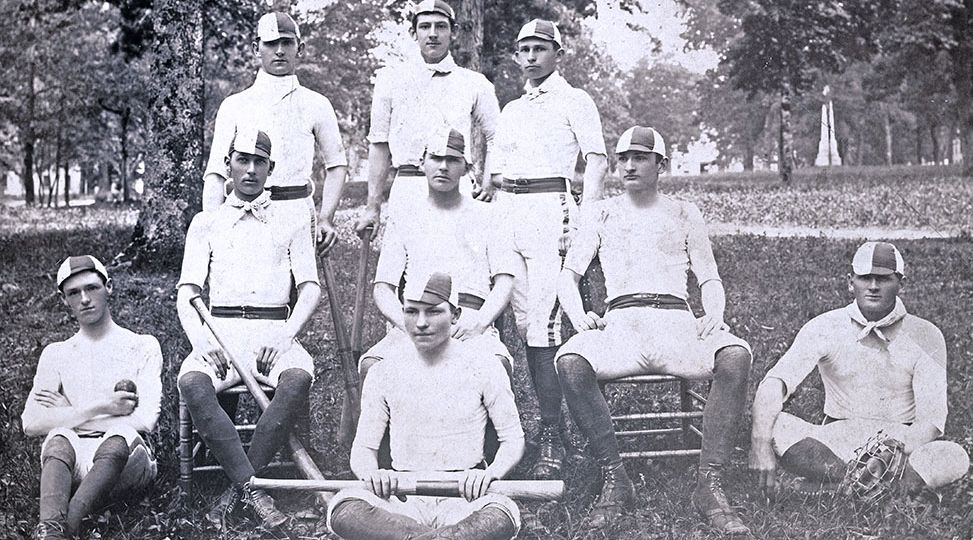
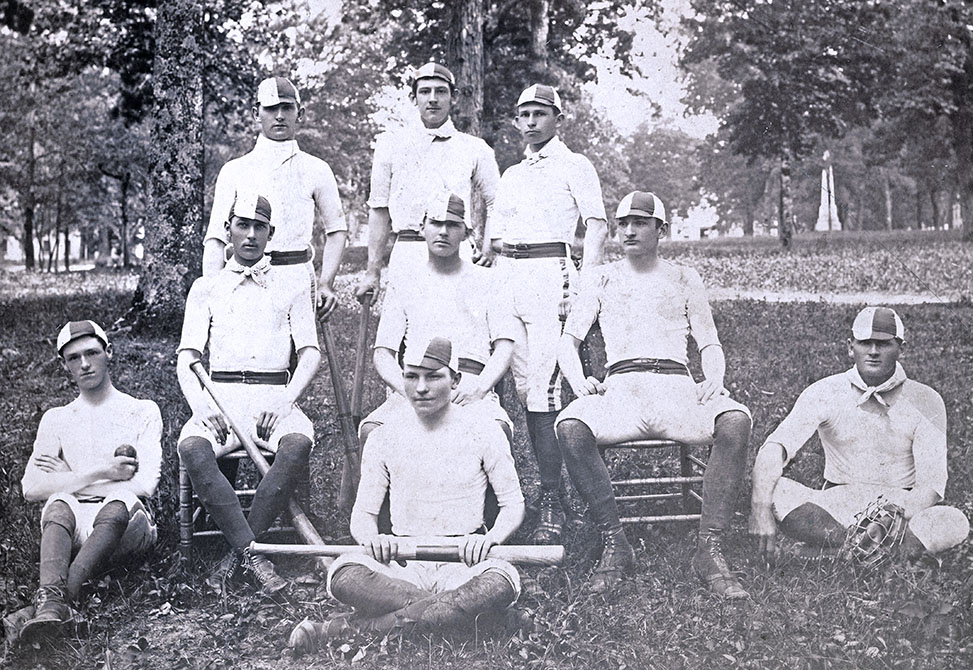
Baseball was one of the earliest sports in which UNC played against other schools. In December 1866, as baseball was catching on across the Southeast following the Civil War, a group from Carolina known as the University Club of Chapel Hill defeated the Pioneer Team in Raleigh. The university team played again, against another Raleigh club, in early 1867. This early interest in baseball appears to have faded as the student population dwindled prior to the university's closing in 1870. Baseball came back to Carolina in 1891 when a varsity team was formed and intercollegiate competition began. The baseball team soon found itself overshadowed by the rising popularity of other sports. In 1916 members of the Carolina team wrote a letter to the Tar Heel complaining of inferior treatment compared to the football and basketball teams. Nonetheless, the baseball team did well, winning the Southern Conference several times in the 1930s and 1940s under Coach Bunn Hearn.

The early 2000s saw the most successful run in UNC—Chapel Hill baseball history: the team made it to the College World Series six times in seven seasons, going all the way to the final round in 2006 and 2007 before falling to Oregon State both times. Several UNC baseball alums have gone on to play Major League Baseball, including Walt Weiss, B. J. Surhoff, Brian Roberts, and Andrew Miller. One of the best-known baseball players from the university is probably Archibald "Moonlight" Graham, brother of Frank Porter Graham, who graduated in 1901. After several years in the minor leagues, Graham was called up to the New York Giants. He played only one inning in the major leagues and never got a chance to bat. His story caught the attention of author W. P. Kinsella, who made Graham a character in his novel Shoeless Joe. Graham's story got even more attention when the novel was made into the 1989 movie Field of Dreams.

Carolina baseball has an interesting connection with George Steinbrenner, former owner of the New York Yankees. Steinbrenner's daughter and son-in-law are Carolina alums. In 1977, 1979, and 1981 the Yankees played exhibition games against the Tar Heels in Chapel Hill. In 2006 Steinbrenner gave $1 million toward the renovation of Boshamer Stadium. The area outside of the renovated stadium was named the Steinbrenner Family Courtyard.

Date Established: 1866

Date Range: 1866 – Present

UNC baseball team on McCorkle Place, ca. 1890s. UNC Image Collection, North Carolina Collection Photo Archives, Wilson Library.
 

16 Apr: Baity Hill Graduate and Family Housing

Baity Hill Graduate and Family Housing

This housing complex, completed in 2005, sits on land once owned by Herman G. and Elizabeth Chesley Baity. Their family home now serves as the student center there. Over a number of years the Baitys sold more than fifty acres to the university, including the areas now occupied by the Dean Smith Center, Koury Natatorium, and part of the Kenan-Flagler Business School. The university purchased the home and surrounding nine acres in 1991. The complex was designed to replace Odum Village, Carolina's first purpose-built family housing complex.

Herman G. Baity, UNC class of 1917, was a prominent faculty member who earned the first ever doctor of science degree in sanitary engineering from Harvard University. At Carolina he was dean of engineering until that program was transferred to North Carolina State College of Agriculture and Engineering in Raleigh (now North Carolina State University). Baity convinced university leaders that clean water was a public health issue and succeeded in keeping his program at the university within what is now the Gillings School of Global Public Health. In the 1950s he was director of the environmental division of the World Health Organization, helping eradicate malaria. His work was honored with the naming of the Herman G. Baity Environmental Laboratory, dedicated in 1990, adjacent to McGavran-Greenberg Hall.

Elizabeth Chesley Baity, UNC class of 1929, taught anthropology at Carolina. She also wrote poetry and children's books, including Man Is a Weaver (1942) and Americans before Columbus (1951).

Date Established: 2004

Date Range: 2004 – Present

AycockResidenceHall_973

16 Apr: Aycock Residence Hall

Aycock Residence Hall

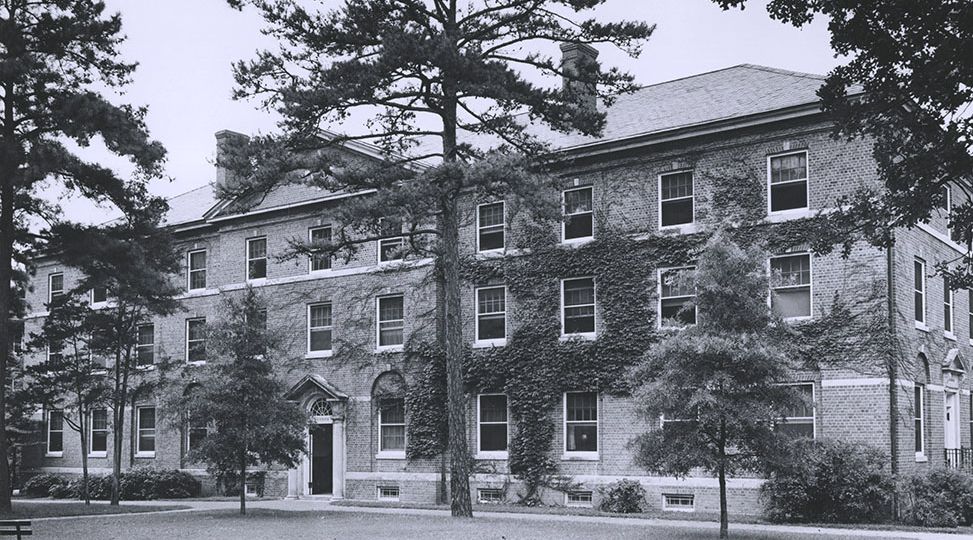
Completed in 1924, Aycock was one of three new dorms built on the east side of campus (Graham and Lewis are the others). It was named in 1928 for Charles Brantley Aycock. At the time Aycock was one of the most revered men in the state. A member of the UNC class of 1880, Aycock was a successful lawyer and served as North Carolina governor from 1901 to 1905. He was known as the education governor for his work to expand public schools for white students in North Carolina. Aycock was also known as a skilled speaker. He traveled the state during the 1898 "white supremacy" campaign, helping spread fear and resentment of African Americans among white voters. His efforts were successful, and he was rewarded by Democratic Party leaders, who nominated him for governor a few years later. As governor, Aycock helped pass new laws that effectively disenfranchised African American voters and established a system of racial segregation and discrimination that would take more than a half century to dismantle. In recognition of Aycock's undeniably racist speeches and actions, three North Carolina universities have chosen to remove Aycock's name from buildings on their campuses: East Carolina University and Duke University renamed residence halls in 2015 and UNC-Greensboro renamed its Aycock Auditorium in 2016.

Date Established: 1924

Date Range: 1924 – Present

Aycock Residence Hall, ca. 1950s. UNC Photo Lab Collection, North Carolina Collection Photo Archives, Wilson Library.
 

16 Apr: Aycock Family Medicine Center

Aycock Family Medicine Center

Located on Manning Drive adjacent to Fordham Boulevard, the center is home to the Department of Family Medicine and its clinics. UNC—Chapel Hill has one of the top-ranked programs in the country for training family physicians. The state legislature funded the building, which was named in honor of William Brantley Aycock, alumnus, long-time faculty member, law school dean, and chancellor from 1957 to 1964. As chancellor, Aycock presided over a landmark expansion period, bringing significant growth in the numbers of students, buildings, medical facilities, and research programs. He brought the men's basketball program through a bribery scandal and NCAA sanctions and hired a young Dean Smith with the goal of restoring integrity to athletics. He took over just two years after the first African American undergraduates enrolled at the university and led a campus that was slowly (and often reluctantly) adapting to a fully integrated student body. After retiring as chancellor, Aycock returned to the law school faculty, where he argued for the importance of academic freedom against North Carolina's Speaker Ban Law.

AveryResidenceHall_973

16 Apr: Avery Residence Hall

Avery Residence Hall

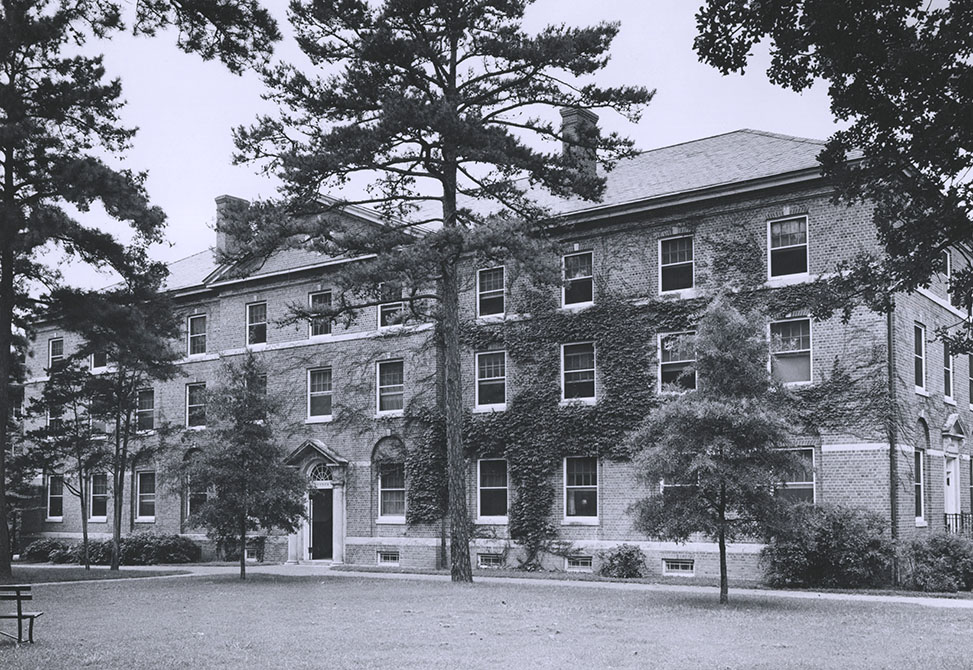
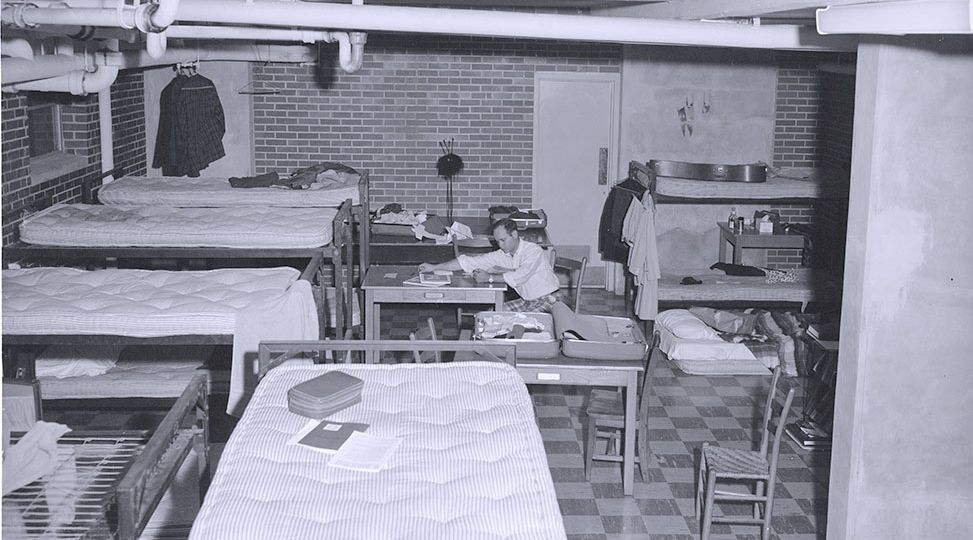
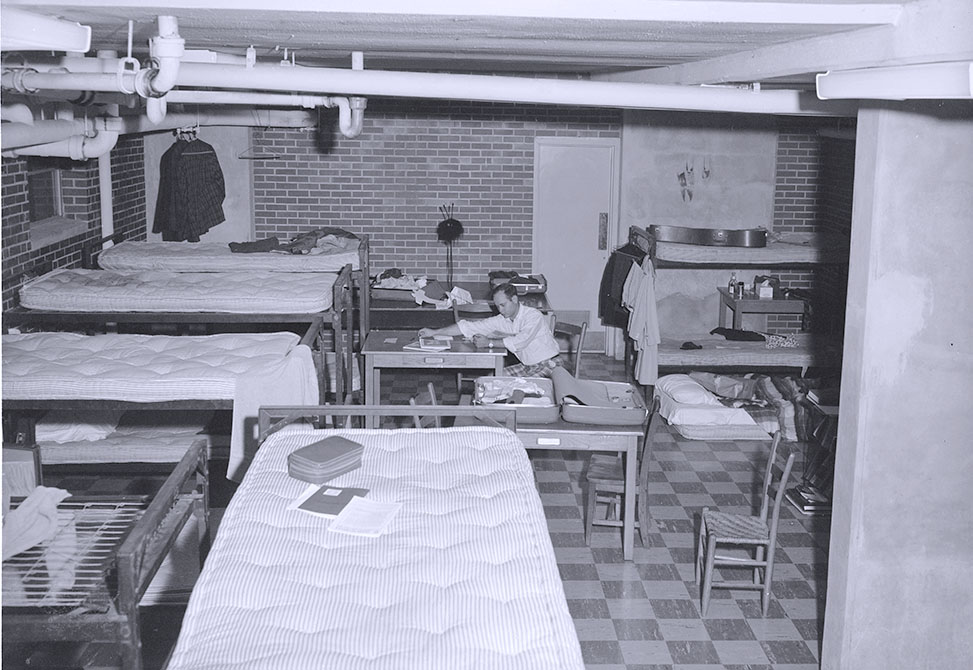
Opened in the fall of 1958, Avery was built at the same time as Parker and Teague Residence Halls. Avery, located at the end of Stadium Drive, was a first step in expanding campus housing toward South Campus. The building is named for William Waightstill Avery, a Burke County native who graduated from Carolina in 1837. Avery was a lawyer, an occupation that led to trouble in 1851 when he was attacked by a man involved in one of his cases. A week later Avery shot the man in a courtroom, killing him instantly. He was acquitted on the grounds of "provocation" and temporary insanity. During the Civil War Avery represented North Carolina in the Confederate Congress before joining the army. He died from wounds received in battle. It is not clear why the UNC Board of Trustees decided in the 1950s to name a campus dorm for Avery.

Date Established: 1958

Date Range: 1958 – Present

Avery Residence Hall, ca. 1967. UNC Photo Lab Collection, North Carolina Collection Photo Archives, Wilson Library.
 

16 Apr: Atlantic Coast Conference

Atlantic Coast Conference

UNC—Chapel Hill was one of the charter members of the Atlantic Coast Conference, formed in 1953 along with six other former Southern Conference members frustrated with that conference's ban on postseason football. (The others were Clemson, Duke, Maryland, N.C. State, South Carolina, and Wake Forest.) By 2018 the university fielded teams in thirteen men's and fourteen women's varsity sports in the ACC and had won more than 250 conference championships, the most of any of the member schools.

Date Established: 1953

Date Range: 1953 – Present

Privacy Preferences
When you visit our website, it may store information through your browser from specific services, usually in form of cookies. Here you can change your privacy preferences. Please note that blocking some types of cookies may impact your experience on our website and the services we offer.