Skip to main content Scroll Top

Entries

bball12

16 Apr: Franklin Street

Franklin Street

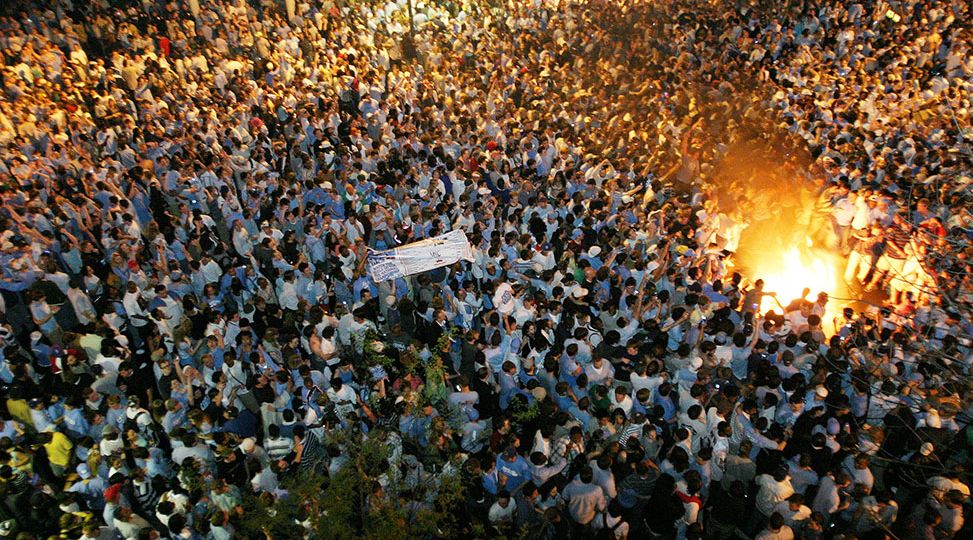
The main street of Chapel Hill is named in honor of Benjamin Franklin for his promotion of education. Students and townspeople famously take over the street to celebrate basketball championships and Halloween. It has been the site for parades and protests, as well as for annual street fairs, including Festifall and Apple Chill. Franklin Street has been there from the beginning of the town in 1793. It grew from a modest path to a tree-lined and often muddy thruway lined by wooden sidewalks, until it was paved in the 1920s. Business establishments have come and gone through the years. Some of the oldest still in business on the street are the Carolina Coffee Shop, Julian's, Sutton's Drug Store, the Varsity Theatre, and the Chapel Hill Tire Company. Two curious markers stood on the south side of Franklin Street near Battle Hall. The one still standing marks the Boone Trail Highway, first erected in 1923 as part of an ambitious plan to raise awareness for the need for better roads in North Carolina. The second marker was for the Jefferson Davis Highway, a transcontinental highway project started by the United Daughters of the Confederacy in 1913, which was never completed. In 2019 the Davis Highway marker was removed by the Town of Chapel Hill.

Date Established: 1793

Date Range: 1793 – Present
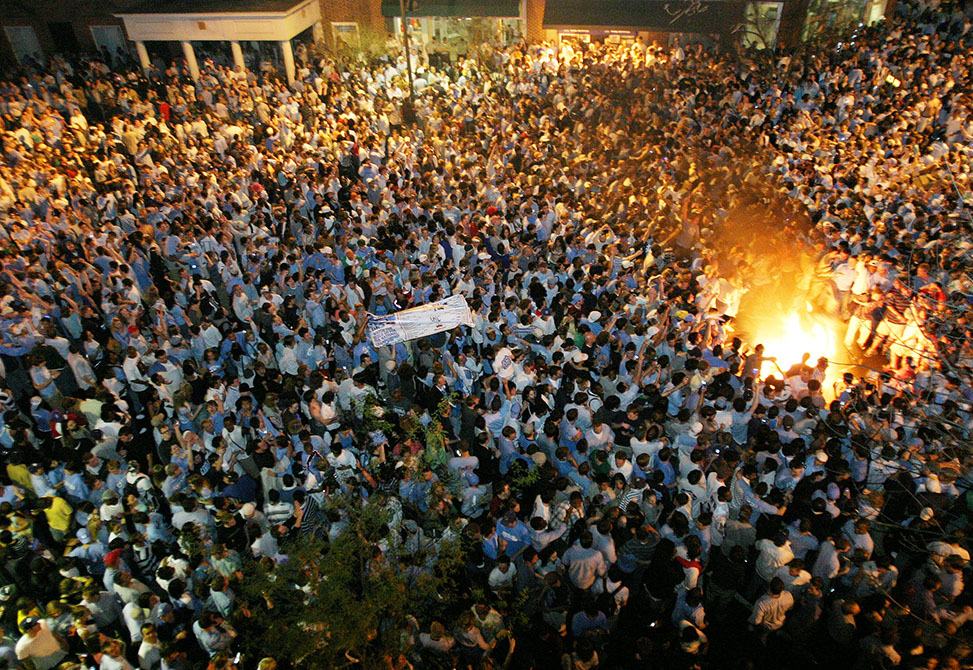
Celebration on Franklin Street following the men’s basketball team’s 2017 NCAA championship. Photo by Justin Smith, UNC—Chapel Hill.
 

16 Apr: Frank Porter Graham Child Development Institute

Frank Porter Graham Child Development Institute

Established in 1966, the Frank Porter Graham Child Development Institute was founded to encourage and facilitate research that would improve the lives of children. The institute supports the work of more than 200 researchers from a variety of disciplines. Major projects have included work on developmental disabilities, early childcare and education, and public policy. The institute operated on on-site daycare facility for more than forty years. It is named for former UNC president Frank Porter Graham.

Date Established: 1966

Date Range: 1966 – Present

ForestTheater_973

16 Apr: Forest Theater

Forest Theater

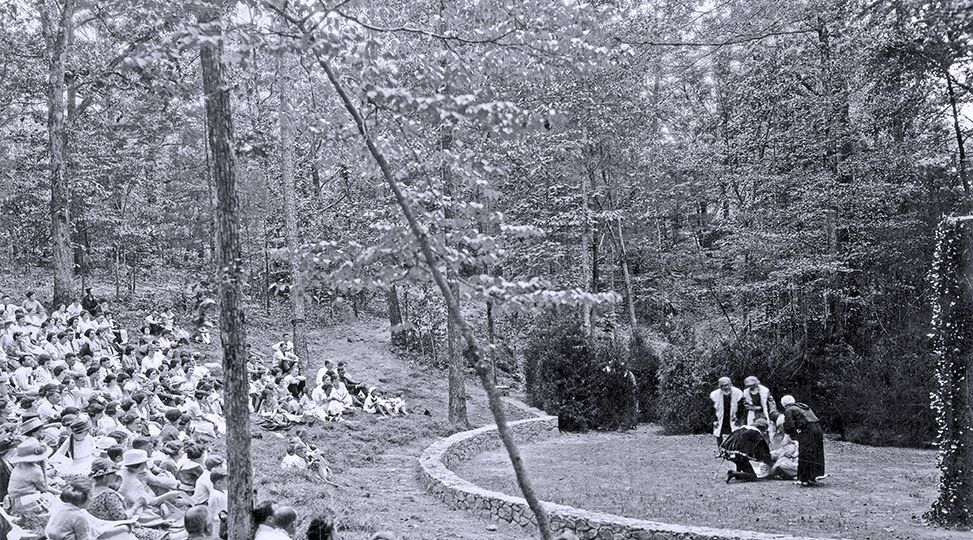
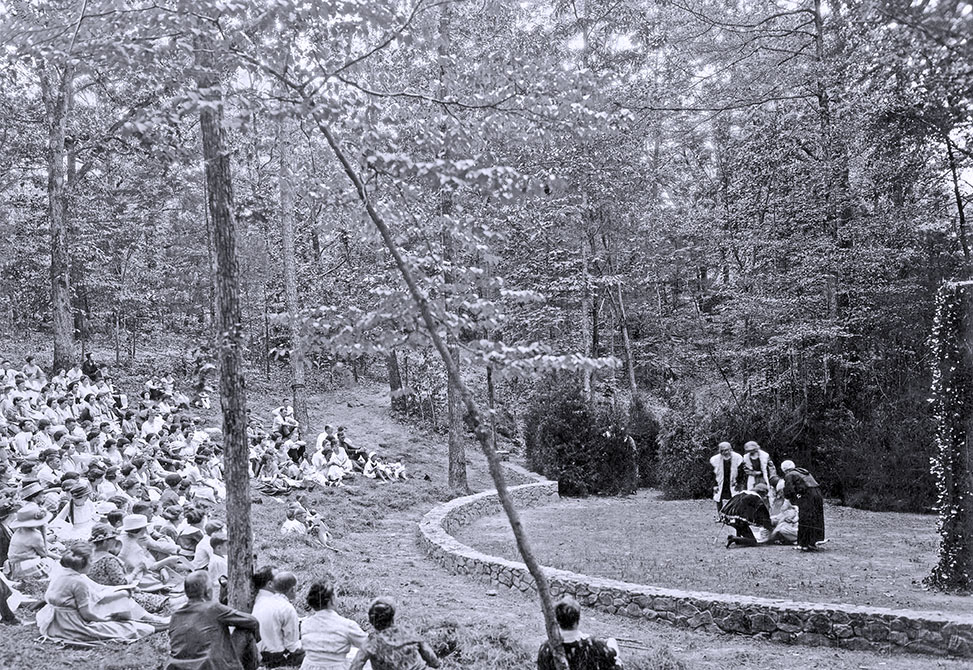
Nestled in a natural bowl alongside Country Club Road in Battle Park, this outdoor theater space is defined by stone walls and light towers. It came into official use as a performing space in 1918, when the founder of the Carolina Playmakers, Frederick H. "Proff" Koch, came to Chapel Hill. The first theatrical performance there, William Shakespeare's The Taming of the Shrew, was presented by summer school students in July 1919. Those first audiences sat on a sloping lawn; the tiered seating and stonework were added in 1940 as a WPA (Works Progress Administration) project. During that work, designers added a stone brought from Roanoke Island that is believed to be a ballast stone from the ships that carried Sir Walter Raleigh's first colonists in the 1500s. The theater was dedicated to Koch in 1953, and the name was formally changed to Koch Memorial Theatre. The North Carolina Botanical Garden now maintains the space, which is still used as a performance space and venue for receptions, weddings, and picnics.

Date Established: 1940

Date Range: 1940 – Present

Early performance at Forest Theatre before the addition of seating in 1940. UNC Photo Lab Collection, North Carolina Collection Photo Archives, Wilson Library.


16 Apr: Fordham Hall

Fordham Hall

Opened in 1988, Fordham Hall was built behind Mitchell Hall to house biology and biotechnology programs, with faculty offices and research laboratories. The building is named for Christopher C. Fordham III, chancellor of UNC—Chapel Hill from 1980 to 1988. Fordham was an alumnus (class of 1947) who returned to Chapel Hill in 1971 as dean of the School of Medicine. His tenure as chancellor was marked by a major revision of the undergraduate curriculum; by continued expansion of the university, including the creation of new programs such as the Area Health Education Centers; and by student anti-apartheid protests that culminated in the building of a mock shanty town on Polk Place.

Football_973

16 Apr: Football

Football

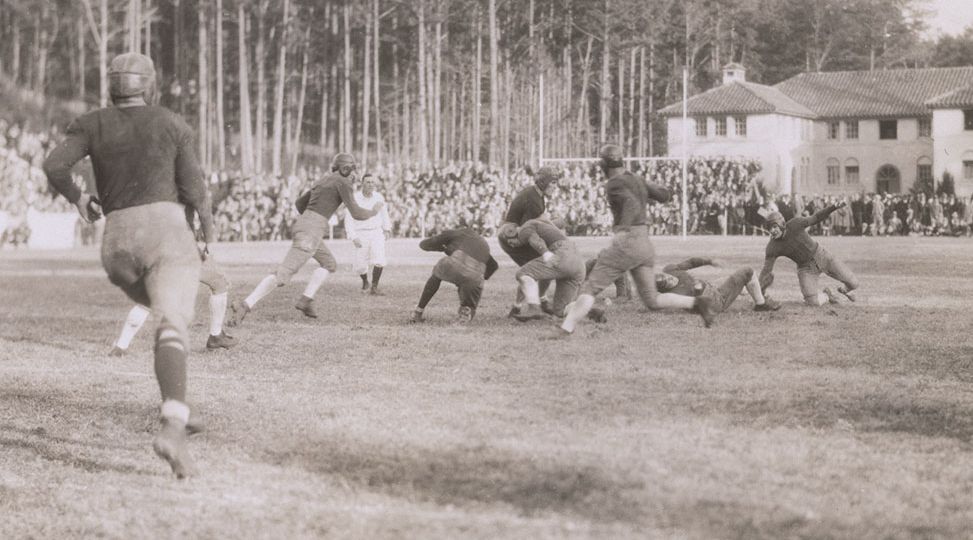
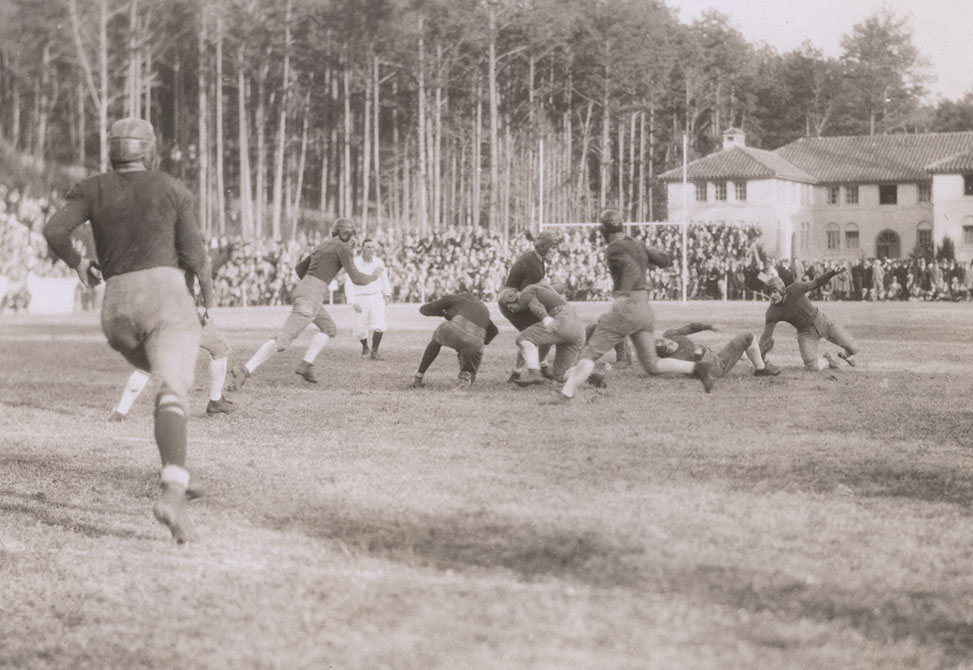
Football as an organized sport at UNC began in 1888. The university's first football game —and the first college football game played in North Carolina —was a loss to Wake Forest in a game played at the state fair. Many university traditions are tied to the growth of football and other sports at UNC in the 1890s: to share news about the team, the Athletic Association began publishing a weekly newspaper called the Tar Heel, the predecessor to the Daily Tar Heel; the "tar heels" nickname began to be more closely associated with the university during this period; when the team needed official colors, it adopted light blue and white, the colors of the two debating societies; and the words for the university's alma mater, "Hark the Sound," were also written during this period.

In the early twentieth century, the football team's biggest rival was the University of Virginia. The schools played several times in Richmond, Virginia, and the games were attended by large numbers of UNC students who traveled by train. With the sport gaining fans in the 1920s, UNC soon outgrew the limited seating at Emerson Field. Support from alumnus William Rand Kenan Jr. enabled the university to build a large, new stadium dedicated to football. Kenan Stadium, located in the woods south of campus, hosted its first game in 1927.

In the years following World War II, Carolina had a series of successful football teams led by star halfback Charlie "Choo" Justice. Justice was one of the best players in the country, twice finishing as a runner up in Heisman Trophy voting. The team went to several bowl games in the Justice era and rose to national prominence. One of the most memorable games of the period was a 1949 meeting between UNC and Notre Dame played in Yankee Stadium. Thousands of UNC students, many waving Confederate flags, traveled to New York for the game.

In the second half of the twentieth century, Carolina football entered the modern era. The university was one of the founding members of the Atlantic Coast Conference in 1953, and games began to be regularly broadcast on radio and television. In 1967 Ricky Lanier joined the team, becoming the first African American scholarship football player at the university.

Date Established: 1888

Date Range: 1888 – Present

Action shot from an early game at Kenan Stadium. The old field house is seen in the background. UNC Image Collection, North Carolina Collection Photo Archives, Wilson Library.


FlowerLadies_973

16 Apr: Flower Ladies

Flower Ladies

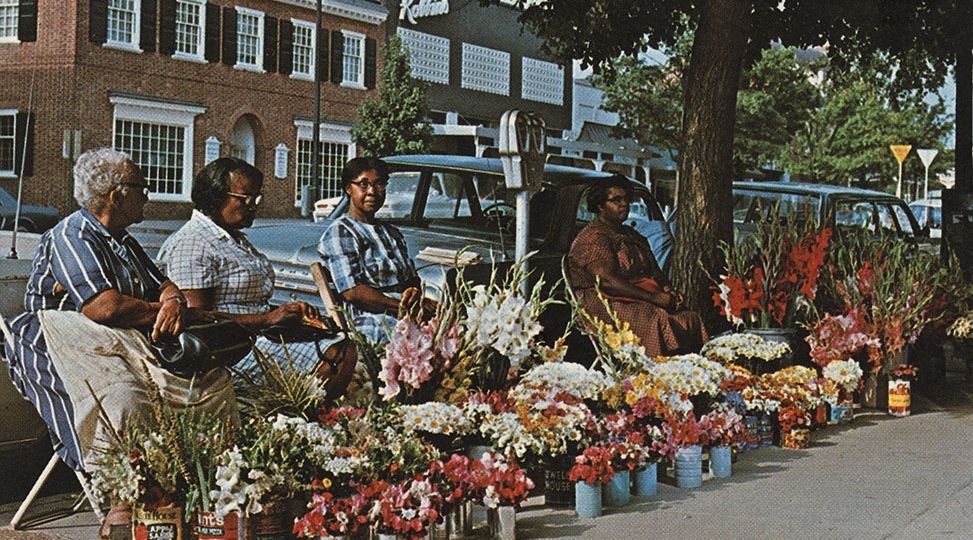
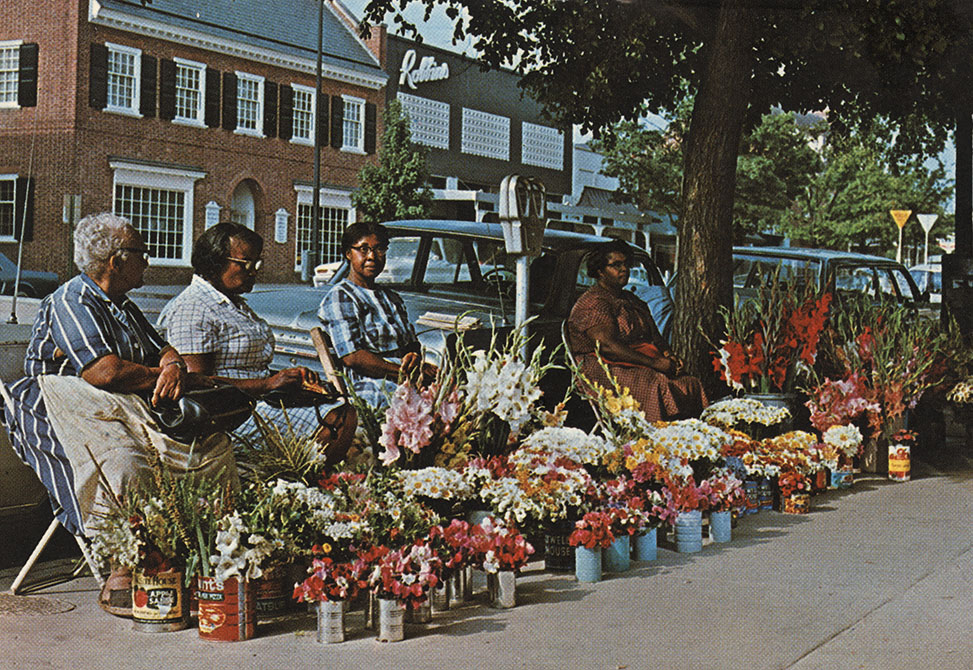
The flower ladies were a Franklin Street institution for most of the twentieth century. A group of local African American women began selling homegrown flowers on Franklin Street as early as the 1920s. They were popular with students and local residents. By the late 1960s more street vendors joined the flower ladies. The new "hippie vendors," selling albums, handmade goods, and drug paraphernalia, soon drew the anger of the Franklin Street store owners, who helped pass an ordinance prohibiting street vendors. Unfortunately, the ordinance also applied to the flower ladies. They moved to the alley adjacent to the Varsity Theatre and eventually to the NCNB Plaza (now called the Bank of America Center), where a few continued to sell flowers through the 1990s.

Date Established: 1930

Date Range: 1930 –
1980

The flower ladies were a mainstay on Franklin Street for decades. This photo shows a group from the late 1960s. Durwood Barbour Postcard Collection, North Carolina Collection, Wilson Library.


16 Apr: First State University

First State University

UNC—Chapel Hill and the University of Georgia compete for the claim of first state university. Each has a fair case to make: Georgia was the first to be chartered, and UNC the first to open. The practice of public support for higher education predates both schools, and even the formation of the United States. Many of the earliest colleges in the country, including Harvard and William & Mary, received at least some direct support from their colonial governments. With the late eighteenth-century establishment of UNC and the University of Georgia, newly formed state governments took a more direct role by issuing charters and providing substantial funding for state universities. North Carolina's 1776 constitution declares, "All useful learning shall be duly encouraged, and promoted, in one or more universities." The legislature in Georgia issued a charter for the University of Georgia in 1785. The North Carolina legislature followed a few years later, chartering the University of North Carolina in 1789. But the North Carolinians were quicker to act. Construction of UNC began in 1793, the first students were admitted in 1795, and the first class graduated in 1798. The University of Georgia would not admit its first students until 1801.

Date Established: 1789

Date Range: 1789 – Present

16 Apr: Finley Golf Course

Finley Golf Course

Designed by George Cobb and opened in 1949, the Finley Golf Course was built to be used by Carolina students and faculty. The university established an intramural golf program shortly after the course opened. In the 1990s golf course designer Tom Fazio oversaw a major renovation of the course. The redesigned course opened for use in 1999. The golf course was named for businessman and entrepreneur Albert Earle "A.E." Finley when it opened in 1949. Finley was the founder of North Carolina Equipment Company and owned the Pines Restaurant and University Motel in Chapel Hill. Finley was a frequent donor to Carolina and to North Carolina State University, where his name is on Carter-Finley Stadium.

Date Established: 1948

Date Range: 1948 – Present

FieldHockey_973

16 Apr: Field hockey

Field hockey

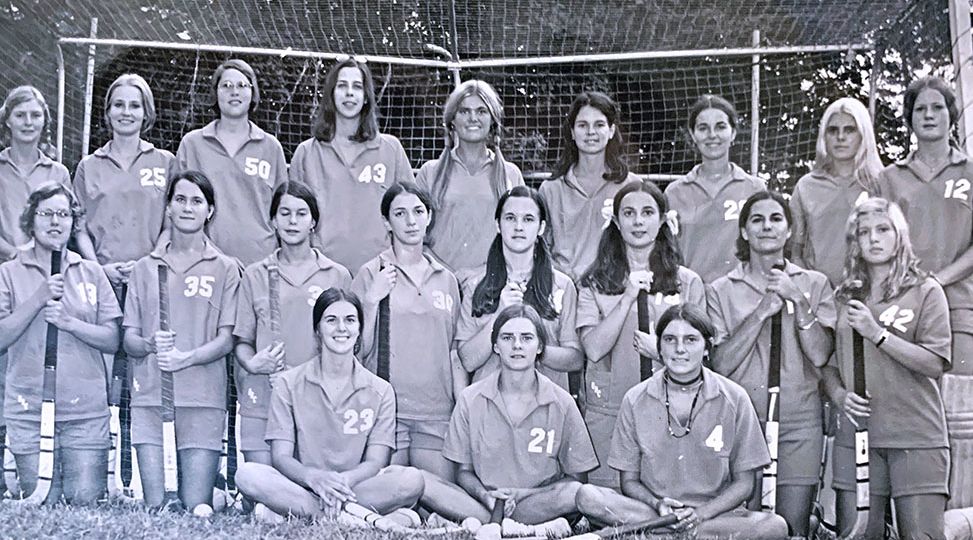
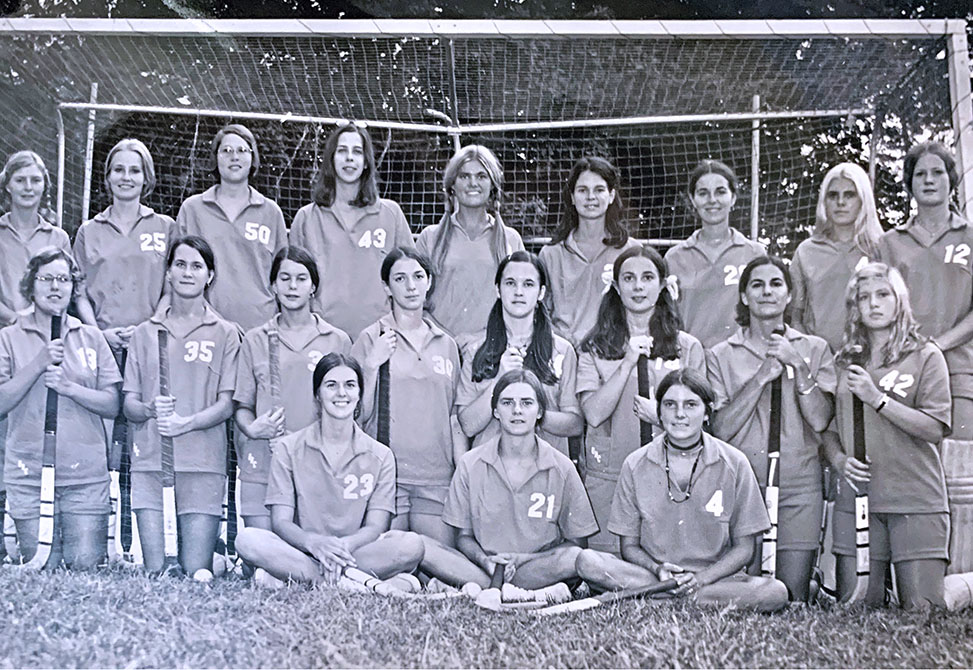
UNC students experimented with field hockey early in the twentieth century. A 1902 Tar Heel article describes a group of male students playing using an "ordinary cricket ball." The sport apparently did not catch on, as it was not mentioned again until the 1930s, when women students began playing it regularly as a club sport. Field hockey became a varsity sport in 1971, along with seven other women's sports as the university joined the Association of Intercollegiate Athletics for Women. The field hockey team has won multiple ACC and NCAA championships and is often recognized as one of the top programs in the country. In 2018 the university opened the new Karen Shelton Stadium for field hockey, named for coach Karen Shelton.

Date Established: 1900

Date Range: 1900 – Present

The 1972 women’s field hockey team was the first one to play a full schedule. UNC Department of Athletics Records, University Archives, Wilson Library.


16 Apr: Fetzer Gymnasium

Fetzer Gymnasium

After four years of construction, Fetzer Gymnasium opened in 1981 on the site once occupied by the Tin Can. The new facility included three separate gyms, as well as offices and classrooms. It is named for Robert Fetzer, who came to UNC in the 1921 to coach football and track. He later served as both director of the athletic department and chair of the Department of Physical Education. Fetzer remained as athletic director until 1952, overseeing a period of substantial growth for the program.

Privacy Preferences
When you visit our website, it may store information through your browser from specific services, usually in form of cookies. Here you can change your privacy preferences. Please note that blocking some types of cookies may impact your experience on our website and the services we offer.